When you’re a kid, and you are too young to go see spooky movies on the big screen (or your parents are too square to take you!), it’s great when the scary movies come to you on the small one. Nowadays, with streaming services being what they are, it’s easier than ever to see anything you want, whenever you want. Back in the day, however, it usually took at least a year before a movie was played on TV or released on video. Luckily, TV networks created their own movies to fill all those programming hours and to quench the thirst of genre film fans. Made-for-TV movies, while not as graphic as films in the theaters, were often quite inventive with their scares. What they lacked in bloodshed, they made up for in suspense and all-around strangeness. For today’s Cinematic Void 31 Days of Voidoween, I want to talk Jack Bender’s 1985 made-for-TV movie Deadly Messages.
While Laura Daniels (Kathleen Beller) and her boyfriend Michael go out on the town, a young woman who is staying with the couple, Cindy (Sherri Stoner), finds a ouija board. Using it alone, Cindy contacts the spirit of a young man who claims that he was murdered. When Laura returns home, she’s forgotten her keys. She climbs the fire escape to her apartment’s window and witnesses a man in dark glasses strangling Cindy. Laura calls the police, but when they arrive and enter the apartment all signs of the crime have vanished -- including Cindy!
Laura uses the ouija board and contacts the spirit of Mark, the same spirit Cindy spoke to. Mark tells Laura that he killed Cindy and that he is going to kill her, too. Soon, Laura is being stalked on the streets of the city and the food court of the mall by a killer. Unfortunately, Laura is unable to convince anyone else, including Michael, that what she is experiencing is real. Will the killer get her? Will Michael believe her before it’s too late?
On the face of it, Deadly Messages is your typical made-for-TV fare. You got your woman-in-peril storyline and your nobody-believes-her storyline stitched together by a is-she-really-crazy storyline. Where Deadly Messages pushes the envelope is in the development of Laura Daniels’s past. I don’t want to give it away, but the truth about Laura is discovered and revealed in a really novel and charming way. It was such a pleasant surprise, and it opened the story up to new and weird possibilities.
Kathleen Beller was a staple of the made-for-TV landscape. She’d starred in such films as Are You in the House Alone?, No Place to Hide, and The Blue & the Grey. She was also a part of the cast of Dynasty for many years. Jack Bender had a heck of a year in 1985. In addition to Deadly Messages, he made Letting Go (with John Ritter) and The Midnight Hour.
Deadly Messages isn’t as over-the-top crazy as Dark Night of the Scarecrow, Trilogy of Terror, or Don’t Be Afraid of the Dark, but I think it’s got a great energy that drives it to a satisfying denouement.
It’s 4 October, and we are proceeding at a steady pace towards Halloween. Before you know it, we’ll all be on the phone to our local TV stations, screaming at them at the top of our lungs to stop it, Stop It, STOP IT!
But that’s for later. For now let us continue down the path that L.A.’s Cinematic Void prepared for us. According to The 31 Days of Voidoween, today is all about “Folk Horror,” that somewhat newish genre of film that seems to be everywhere nowadays. It’s kind of like film noir. It’s a critics’ term that was defined well after the films that serve as its prime examples were released. If you’re interested, I’ve got more to say about the genre in an earlier entry on this blog -- check out my discussion of Nigel Kneale’s “Murrain.” Today, I want to talk about a folk horror novel that I think should be read much more than it seems to be. Let’s talk Harvest Home by Thomas Tryon.
In the late-1970s, Stephen King had this to say about Tryon’s novel:
"It isn't a great book, not a great horror novel, not even a great suspense novel ... Never mind the best seller list. Mind this, instead: Sentence by sentence, paragraph by paragraph, it is a true book; it is an honest book in the sense that it says exactly what Tryon wanted to say. And if what he wanted to say wasn't exactly Miltonian, it does have this going for it: in forty years, when most of us are underground, there will still be a routine rebinding once a year for the library copies of Harvest Home.”
I think ol’ Stevie maybe got it backwards, because I think Harvest Home is a pretty terrific (in all senses of the word) book that very few people read anymore, let alone are even aware of. (I’d be interested to know the condition of the book at my local library and whether or not it is lovingly rebound year after year.) When I went to see Ari Aster’s Midsommar a few years ago, I was somewhat surprised by the amount of people who thought it was so original and daring. I said to my wife at the time, “It’s like no one’s ever heard of The Wicker Man or Harvest Home.” She turned to me and said, “What’s Harvest Home?”
See what I mean?
Harvest Home is an example of what I like to call the “Return to Nature” genre that became very popular in the 1970s. RtN texts usually concern a person or group of people who decide that they can’t live in the city anymore. It’s just too dangerous and dirty and anti-human. So, they pull stakes and split the scene and make for the countryside. You know, where people are more “real” (whatever that means) and where they can live off the land. So far, we can consider Green Acres to be part of the Return to Nature genre.
Where things usually go off the rails on this crazy train and send us into Folk Horror territory is that we eventually discover that the good townsfolk who welcomed us with open arms are actually cultists of some sort who are looking for fresh blood for their arcane, eldritch rituals. Oh, well, at least the air is fresh, right?
Such is the case in Harvest Home. Ned Constantine moves his wife Bethany and their daughter Kate from New York City to the Connecticut village of Cornwall Coombe. The Coombe seems to be utterly isolated (uh-oh), and the villagers like it that way. They are also very proud that they keep to the “old ways" (UH-oh). They also partake in many festivals throughout the year, culminating with the most important one, “Harvest Home,” which only takes place once every seven years.
UH-OH!
Need I say more? You know what’s comin’. Your Aunt Suzie knows what’s comin’. You know who doesn’t know what’s comin’? Ned. The big dummy just has to see what happens during the Harvest Home festival. I won’t say more, but rest assured that it’s a little more complicated than corn mazes.
If you don’t feel like sitting down with Tryon’s novel, then track down the made-for-TV movie that was made in the 1970s starring Bette Davis as Widow Fortune, the town’s matriarch.
Fun fact: before he turned his talents to writing, Thomas Tryon was an actor. He appeared on Broadway, TV, and movies in the 1950s and 1960s. Monster kids may recognize his face, if not his name, from the classic I Married a Monster from Outer Space!
This made-for-TV movie is a good example of what I like to call a “diet giallo.”
For those of you not in the know, “giallo” is the Italian word for “yellow.” In 1929, Italian publisher, Mondadori, published a series of popular British and American mystery books translated into Italian. These books were printed with yellow covers. They proved so successful that other companies jumped on the bandwagon and published their own mystery series also using yellow covers. Soon, the Italian reading public was all about going down to the bookstore to pick up the latest “giallo.”
Giallos (or gialli if you want to be pedantic about it) soon made the leap from the page to the big screen. Mario Bava’s 1963 film La ragazza che sapeva troppo (The Girl Who Knew Too Much, a.k.a. Evil Eye) is considered by many to be the first cinematic giallo. Its mixture of thriller and horror conventions (with a little sex thrown in) would be the well that the genre would return to again and again for the next 20-30 years.
Being a “diet giallo,” Through Naked Eyes has all of the taste of regular giallo, but without the heavy calories associated with that genre’s dependency on explicit sex and blood. The plights and peccadilloes of co-stars Pam Dawber and David Soul are toned-down variants of what one would hope to find in a Dario Argento or Brian De Palma flick.
While that may sound like a set-up for a glib dismissal, I assure you it is anything but. Through Naked Eyes is a lot more interesting and kinkier than you would expect from a made-for-TV movie. It has quite a bit to say about modern, urban life, the ways that we distance ourselves from one another, and how those distances affect the way we perceive others.
Plus, there’s peeping. And a groovy synth soundtrack. And a black glove-wearing murderer. It’s pretty much got it all!
The film opens with aerial shots of Chicago. It’s the middle of the day, and a radio announcer tells us in voiceover that the city is in the midst of a horrible heatwave that will probably last the rest of the week. The mobile camera comes to rest on an apartment complex, its twin buildings connected by a large lobby. Emerging from the elevator into this lobby, an old man collapses and dies with a knife in his back.
Anne Walsh (Pam Dawber) and William Parrish (David Soul) are residents of this complex; he in the north tower, she in the south. Police, TV reporters, medics, and other residents gather below while the old man’s body is removed. William pulls out his trusty pair of binoculars and watches the proceedings. He scans the apartments in the south tower across the way. People lean from their windows to follow the action. William continues to watch the watchers when he pulls up short – there, in the apartment opposite his, a woman is at a telescope watching him!
Thus begins a very odd courtship between Anne and William. Each watching the other watch them. The movie does not disparage this arrangement, doesn’t treat it as sordid or immoral. These are two adults who willingly and knowingly engage in peeping.
Alas, the police take a dim view of William’s and Anne’s mutual voyeurism. Detectives Wylie (Dick Anthony Williams) and Scopetta (Gerald Castillo) think William is their guy. Scopetta lays out their case to police psychologist Dr. Muller (Fionnula Flanagan), but it doesn’t quite go as he, or the audience, plans:
Sgt. Scopetta: He’s unmarried. He has never been married. He doesn’t currently have a steady girlfriend. Lives alone. Makes pretty good money. His mother died when he was a teenager. Doesn’t have any brothers or sisters. His father lives in Miami. He’s in sporting goods, a middleman. It’s a lousy relationship...
Dr. Muller: Anything else?
Sgt. Scopetta: Yeah. William Parrish peeps.
Dr. Muller: What?
Sgt. Scopetta: He uses binoculars. Him and a lady friend of his, they both peep. At each other.
Dr. Muller: Sounds like fun.
Surprisingly, Dr. Muller does not see mutual peeping as a problem. This is a refreshingly enlightened attitude, especially for a TV program at the time. America had taken a conservative swing to the right with Ronald Reagan’s election in 1980, and deviant sexualities were in the crosshairs. Dr. Muller goes on to reframe Scopetta’s case file on William, making him seem less of a homicidal maniac and more of what he really is – a lonely man:
He’s a professional man in his mid-thirties. Got a lousy relationship with his father. Maybe they even hate each other’s guts, but what else is new? He’s single – not ‘unmarried’ – single. He lives alone, he dates irregularly, devotes himself to his career, and on occasion he titillates his libido by practicing man’s most common sexual diversion: girl watching.
As the bodies pile up, however, Scopetta and Wylie still think William is their man. They try to drive a wedge between the young couple, who by this time have moved past peeping and into "going out to dinner" range of each other.
Unbeknownst to the everyone, however, Anne’s and William’s relationship is a ménage à trois. Someone, it turns out, is watching the watchers. Someone who likes taking pictures. Someone who likes wearing leather gloves. Someone with a set of steak knives that’s missing a few pieces.
Written by Jeffrey Bloom (Blood Beach, Flowers in the Attic, and episodes of Starsky and Hutch) and directed by “Mr. Made-For-TV” himself, John Llewellyn Moxey (A Taste of Evil, Smash Up on Interstate 5, and episodes of Mission: Impossible, Magnum P.I., and Murder, She Wrote), Through Naked Eyes has got a nice groove to it – and I’m not just talking about the synthtastic score written by Guy Melle!
There are red herrings aplenty: could the killer be William’s fellow symphony member, Karen (Amy Morton), who desperately wants William to come and stay with her? Or could it be Terry (Rod McCary), Anne’s writing agent with whom she’s been sharing more than just the customary 10% fee, if you catch my drift? Even Anne and William are painted as plausible suspects during the proceedings.
All of the actors are given a chance to shine. David Soul does good work making William seem like someone unaccustomed to human contact. The scene between William and his father (William Schallert) is poignant, with both men slowly and painfully revealing their emotional scars to each other. For those of you who only think “comedy” when you hear the name Pam Dawber – and, let’s face it, considering her excellent work in Mork and Mindy and My Sister, Sam, you couldn’t be blamed for thinking that – rest assured that she plays “erotic thriller heroine” just as well. Dawber’s portrayal of Anne’s sexual confidence and vulnerability is finely balanced.
Those of you who like to play the “Hey, it’s that guy!” game should be on the lookout for John Mahoney and Dennis Farina. The Internet Movie Database (IMDb) claims that Donald Moffat (“Garry” from The Thing) is “Patrolman #4,” but the name of the actor in the end credits is actually Don Moffett. Seems like a totally different guy.
Through Naked Eyes plays like a giallo, that venerable Italian cinematic genre that was a potent mixture of mystery, violence, and sex. Because it’s a made-for-TV movie, however, it can’t rely on gory set-pieces or explicit sexual content. Instead, it focuses on some of the Hitchcockian tropes that were also a part of the DNA of gialli, such as featuring a protagonist who is forced to venture where the police fear to tread in order to investigate a series of horribly violent crimes.
The most important Hitchcockian trope on display is voyeurism. Watching and being watched is at the heart of Through Naked Eyes. The harmless peeping that Anne and William engage in isn’t the only voyeurism dealt with here, however. Through Naked Eyes shows the viewer (inside and outside the movie) just how compartmentalized modern life really is.
We see life happening from afar, whether it’s through our binoculars or our TV sets, and we make judgments based on those observations. Because of the distances between us, we can’t tell what other people are really thinking or feeling, so we project emotions and motives onto them. We think we understand other people, but we really have no idea what another person is all about until we interact with them.
Everyone in Through Naked Eyes engages in some form of voyeurism and comes to a wrong conclusion because of it. Anne and William watch each other, but they don’t have a real sense of who the other person is or why they are being watched in return by them. Anne sees William and his father argue, but she doesn’t know why. She sees William get angry, but doesn’t realize that it’s because he wanted to open up to his father, but didn’t take the chance. Her fears that Sgt. Scopetta may be right about William color her perceptions.
Sgt. Scopetta, too, is engaged in voyeurism. He watches William from afar and assumes that he is a pervert and, therefore, the murderer. Dr. Muller takes Scopetta’s views of William and builds an entirely different person from them.
The viewer, too, is a voyeur. (You aren’t getting off that easy!) We see the characters and make snap judgments about who is guilty or not based on what we see or our experiences with the genre.
In a review that I found on-line, it was pointed out that since the word “Naked” was in the title there should have been some nudity. The reviewer was perhaps being a tad facetious, but I think it’s an important point. Why is it called Through Naked Eyes, after all?
I may be stuffed full of wild blueberry muffins, but I think the use of the word “Naked” in the title is a cry for us to set aside our telescopes, binoculars, and cameras. To see with “naked” eyes means that we don’t need the eye of the camera to see. We’ve closed the distance to other people and can better see their lives as they really are. It’s the first step on the road to understanding.
Of course, that may just the mad musings of a Film Studies major. Through Naked Eyes is currently on Amazon Prime and YouTube. Peep on it for yourself and let me know what you think. I'll be watching...
Since listening to Ms. Reyes’s podcast, I’ve gone back and re-watched some old favorites and discovered more than few new ones like...
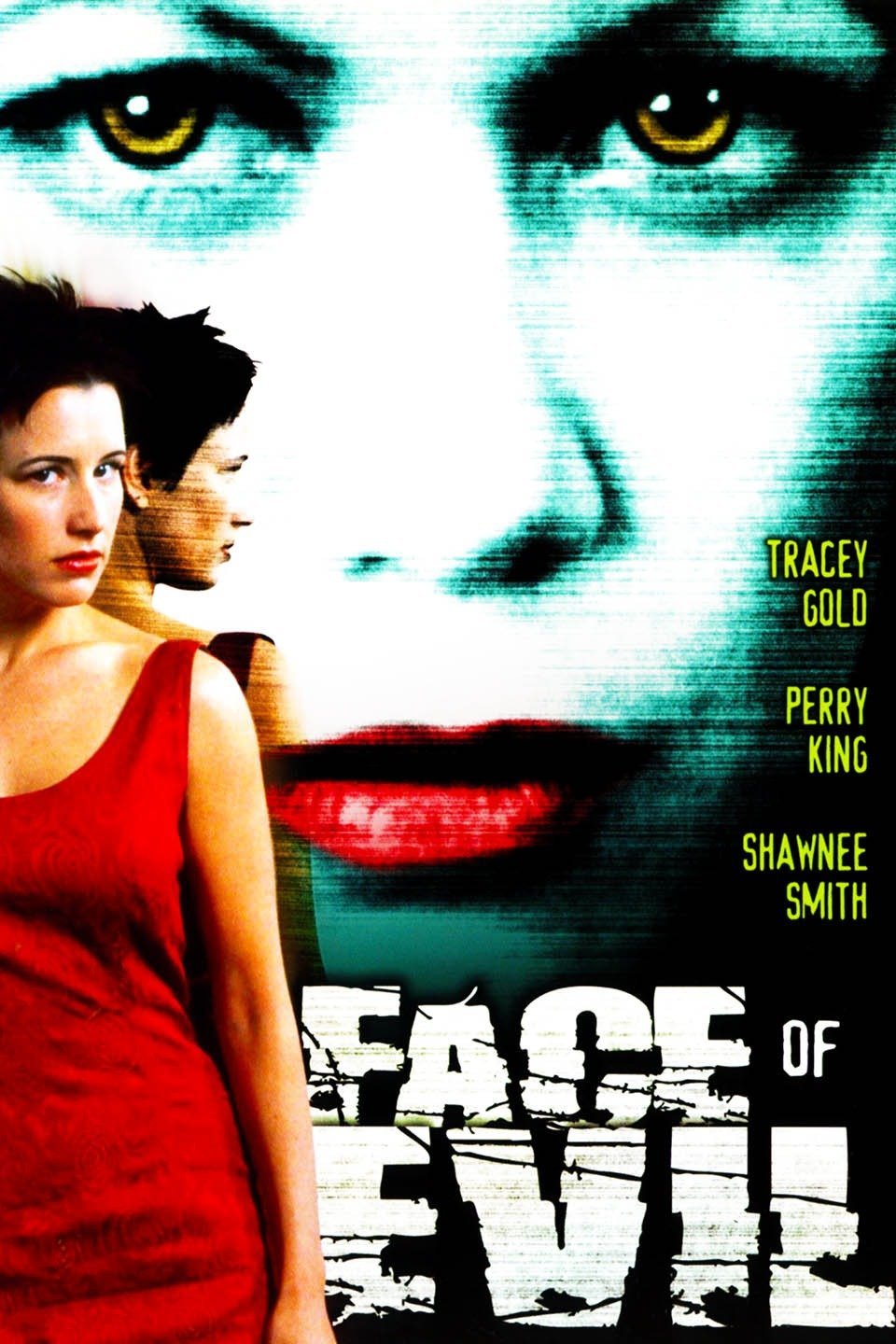
FACE OF EVIL!!!
Far from being a poor relation to the feature film, the made-for-TV movie has a lot going for it. For one thing, the running time is just right. Most made-for-TV movies come in at around 75-90 minutes. That means that there isn’t a lot of time for fooling around. Every scene has to forward the plot/story in some way. Another reason to enjoy made-for-TV movies is that there are loads of roles for older actors. Whereas most feature films tended to skew younger in cast and viewers, the made-for-TV movie was a wonderful chance to see veteran actors strut their stuff and do what they do best. Bette Davis, Edward G. Robinson, and Barbara Stanwyck all performed memorably on TV.
Although made-for-TV movies were made in a variety of genres, it’s the thrillers and horror films that people tend to remember most fondly. I still recall watching Dark Night of the Scarecrow when it aired in 1981. It scared the pants off of me!
Just as scary as the actual movie sometimes was the TV spot advertising it. You’d catch sight of what was to come and listen to Ernie Anderson’s voiceover, and you couldn’t wait for it to hit the airwaves.
Home for the Holidays (1972), dir. by John Llewellyn Moxey
Killdozer (1974), dir. by Jerry London
Trilogy of Terror (1975), dir. by Dan Curtis
The Dark Secret of Harvest Home (1978), dir. by Leo Penn
I urge any of you who liked Midsommar by Ari Aster to read Thomas Tryon's novel, Harvest Home. You can thank me later.
The Initiation of Sarah (1978), dir. by Robert Day
The Ghost of Flight 401 (1978), dir. by Steven Hilliard Stern
Devil Dog: The Hound of Hell (1978), dir. by Curtis Harrington
Cliffhangers (1979), various directors
Not a made-for-TV movie, I know, but still pretty great!
The Legend of Sleepy Hollow (1980), dir. by Henning Schellerup
Dark Night of the Scarecrow (1981), dir. by Frank De Felitta
This House Possessed (1981), dir. by William Wiard
Deadly Messages (1985), dir. by Jack Bender
The Midnight Hour (1985), dir. by Jack Bender
Ol' Jack was a busy boy in 1985. The Midnight HourANDDeadly Messages?! C'mon!
The Haunting of Sarah Hardy (1989), dir. by Jerry London
Women named Sarah don't seem to make out well in made-for-TV movies. Between being initiated and haunted, poor Sarah is not having a good time.
My cat is annoying. Present him with a closed door, and he cries and scratches at it until you open it for him. Then, as soon as he peeks into the room that was off limits and sees what’s there, he gets bored and wanders off.
Ouija boards are that way for people in horror movies. Show someone a witchboard and they just gotta use it to open the door between this world and the next and see what’s there. And what’s back there is usually bad news. Has there ever been a movie where something good has happened as a result of playing with a Ouija?
Hmmm…it did make Tawny Kitaen swear like a longshoreman and gave the world one of the greatest end credits themes ever – but that’s the exception that proves the rule.
In this week’s movie, 1985’s Deadly Messages (a.k.a. Ouija), the Ouija board doesn’t just open a portal to some supernatural realm. For Laura Daniels (played by Kathleen Beller), it opens up a door to her past. A door that she had no idea existed.
Deadly Messages is a great example of what makes the made-for-tv movie genre so fascinating and so much fun. The story flows at a quick pace. Every scene is there to move the plot forward. There ain’t no time for foolin’ around. If you dawdle on some artsy-fartsy shot, then people may switch over to Three’s Company!
The acting is excellent. Ms. Beller is a veteran of the made-for-tv movie, especially of the woman-in-peril-who-doesn’t-know-who’s-after-her variety. Dennis Franz does his put-upon, skeptical cop schtick. His lines are delivered with the flattest accent permissible by law.
It’s a good mystery overall, too. Because the plot is driving forward all the time, you never lose sight of what’s going on, which allows the filmmakers to get pretty far out with the story. There is a plot twist about halfway through that I can say I did not see coming and I don’t think I’ve seen it again in another film. It’s very smart and enjoyable, and is keeping with the tone of the rest of the picture.
I know Deadly Messages isn’t your standard Halloween movie, but it’s got a lot of chills and thrills that I think are a good warm-up for the rest of the month’s viewing.