Wednesday, October 26, 2022

Blog-o-ween 2022: Vincent Price

Halloween is a scant five days away, Faithful Reader, and we have a very special Blog-o-ween entry planned for you. Today, we celebrate the radio career of the devilishly debonair, the suavely spooky, the creepy and classy Vincent Price.

Vincent Price was born in May, 1911, in St. Louis, Missouri. In 1933, he graduated from Yale University with a degree in English and a minor in Art History. (Let's hear it for English majors!) While in London studying for a master's degree in Fine Arts, Price became interested in acting and appeared on stage in 1934. By 1935, he was performing with Orson Welles's Mercury Theatre.

Once back in the States, Price found work in Hollywood, playing in a wide variety of films like Laura (1944) and Leave Her to Heaven (1945), both with Gene Tierney, Service de Luxe (1938), The Song of Bernadette (1943), and The Web (1947). However, Price became best known for his work in horror pictures, such as Tower of London (1939) with Boris Karloff and House of Wax (1953) with Chuck Bronson(!).

In the 1960s, Price teamed up with Roger Corman and American International Pictures to make a cycle of films based on the work of Edgar Allan Poe, one of Price's favorite artists. For AIP, he made The Pit and the Pendulum (1961), Tales of Terror (1962), The Comedy of Terrors (1963), The Raven (1963), The Masque of the Red Death (1964), and The Tomb of Ligeia (1964). In 1968, he made Witchfinder General for Tigon British Film Productions. This Michael Reeves film is consider to be one of the "unholy three" (along with The Wicker Man and The Blood on Satan's Claw) of the Flk Horror movement.

In the 1970s, Price made The Abominable Dr. Phibes (1971), its sequel Dr. Phibes Rises Again (1972), and Theatre of Blood (1973).  He also appeared in less violent fare, such as The Muppet Show and The Hilarious House of Frightenstein.

If he is known at all today by the average person, it's probably either by his voice acting on Michael Jackson's hit song "Thriller" or his last work on film, Tim Burton's Edward Scissorhands (1990).
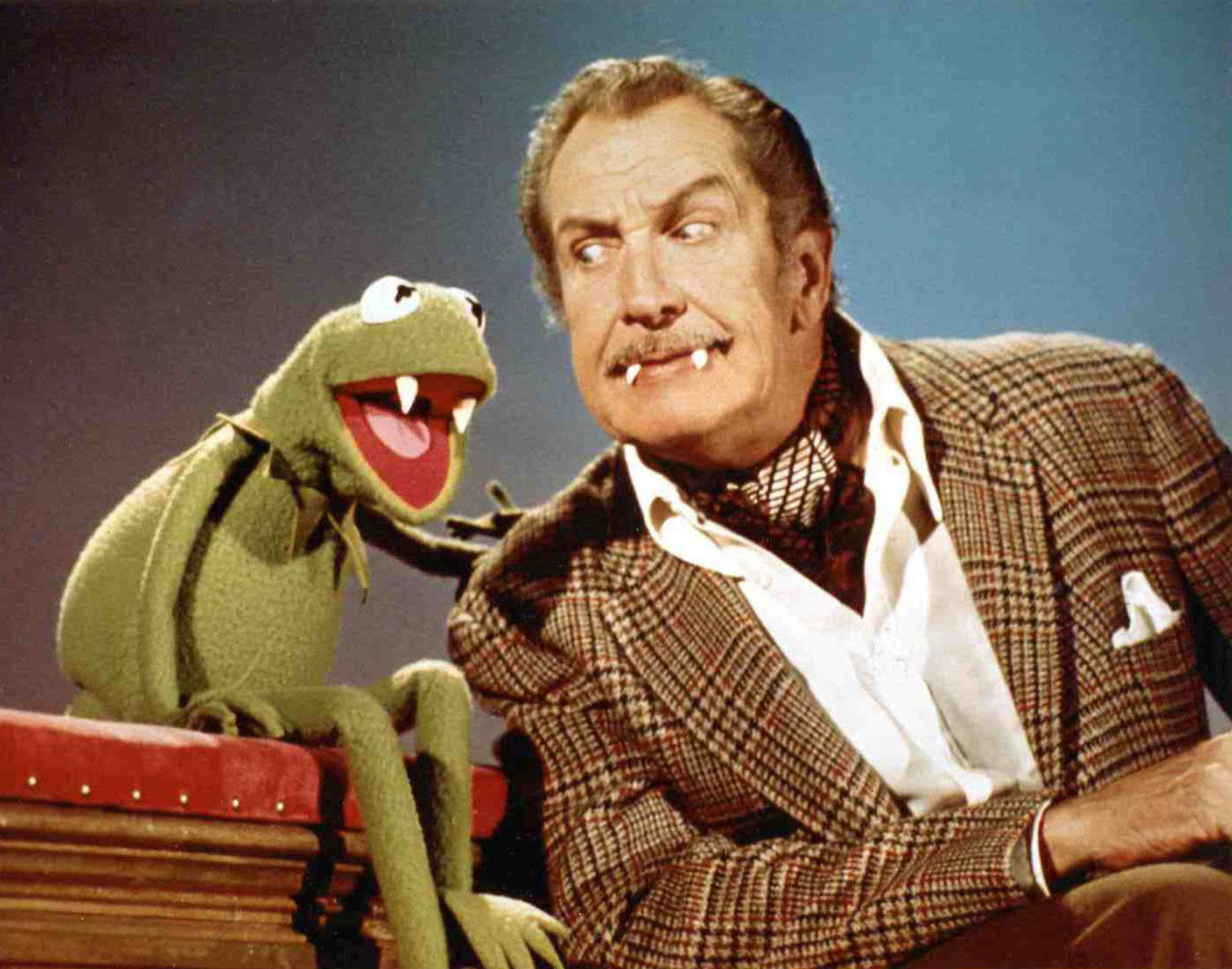
A fantastic career on film, yes, but what about old time radio, you ask? Vincent Price spent the years 1947 to 1951 playing Simon Templar, otherwise known as The Saint. The three episodes will will listen to today have Price in less than saintly circumstances, which is really how we prefer him, no?

First up is an episode of a BBC show called The Price of Fear. It ran from 1973 to 1983. The show's episodes are all based upon the fictional adventure of a man named...Vincent Price! This episode is called "The Waxwork," and it is based on the A.M. Burrage short story. Price bumps into an old writer friend at a pub. The man has been invited to spend all night in the "Chamber of Horrors" at the local waxwork museum. One of the statues is of one Doctor Bordet, a serial killer better known as the "Terror of Paris." He escaped from the asylum he was sent to, but the authoritues presume him to be dead...and there's no reason to doubt the authorities is there?

Next is an episode of Suspense from 1959. Based on the short story by Ambrose Bierce, "An Occurrence at Owl Creek Bridge" is the tale of a man being executed during the American Civil War. He is to be hung from a railroad bridge. When he falls from the bridge, the rope breaks, and he makes his escape through Owl Creek. He tries to make it back to his wife, but his journey is a waking nightmare. Will he make it back home? What are the strange constellations he sees in the sky and the unknown language he hears whispered in his ears?

Last, we have my favorite Vincent Price radio performance. "Three Skeleton Key" is based on the 1937 short story by French author Georges-Gustave Toudouze. It was adapted for the radio many times; this particular performance is from Escape. Three men tend a lighthouse off the coast of French Guiana. An abandoned ship crashes onto the island and from it come a ravenous horde of rats. The rats swarm over the lighthouse, and the men must engage in a life-and-death struggle to survive. As the tagline for The Texas Chain Saw Massacre goes: "Who will be left...and what will be left of them?"

Tuesday, October 25, 2022

Blog-o-ween 2022: The Black Tapes

It's six days until the BIG day, and we are coming to the end of our month-long celebration of spooky old time radio here at LARPing Real Life. Not to say that everything that has come before has been run-of-the-mill -- far from it! -- but what we have planned for this week is pretty special, if I do say so myowndamnself. We'll have Vincent Price stuck in a lighthouse surrounded by rats, Robert Taylor wondering what the blood oozing out of his new house's closet will do for its resale value, and a trio of tales based on the works of Edgar Allan Poe. You're gonna wanna stay tuned as we get down to the nitty and the gritty.

Not that Gritty!

Today, we are going to look at the last of a quartet of podcasts that I think are prime examples of modern audio drama: The Black Tapes.

The Black Tapes is a fictionalized nonfiction podcast best described as “Serial meets The X-Files.” Created by Paul Bae and Terry Miles, The Black Tapes ran for three seasons from May, 2015 to November, 2017. The podcast follows the exploits of radio host Alex Reagan (Lori Henry), who sets out to explore the world of paranormal investigation for the National Radio Alliance show Pacific Northwest Stories (not a real thing). While interviewing people for her story, Alex meets the enigmatic (and stuffy as all get out) Dr. Richard Strand (Christian Sloan), a man dedicated to debunking all things paranormal. Strand keeps records of all his cases on VHS in white boxes. There are, however, a series of tapes in black cases. These are cases that Strand was unable to prove or disprove. Alex becomes intrigued, and she and Strand begin to go through these black tapes.

Like some of the other podcasts we've looked at for Blog-o-ween (Limetown and Video Palace), The Black Tapes sounds exactly like an NPR show. The line between fiction and nonfiction is always blurred. Bae and Miles do a really fine job of creating verisimilitude by creating realistic backstories and folding in real people and real events into the overall story. The soundscape that the show’s producers created is absolutely pitch perfect. The in-the-field recordings have the feel of actual on-the-spot interviews.

Alex’s and Dr. Strand’s reactions to what they see and hear also seem very realistic. Alex, like Mulder on The X-Files, wants to believe, while Strand, the Scully of the two, is always undercutting what we know to be true. It does begin to get tiring to hear Strand continually debunk the reality of what they are witnessing, but like The X-Files, this incredulity on Strand’s part does evolve.

The first season in particular makes for really great spooky listening. “The Unsound,” about a mysterious piece of audio that was supposedly created by the Devil himself, and “Turn that Frown Upside Down,” about a Maine town with a local legend - the Woman with the Upside Down Face - that can kill you if you see it, are two of the best episodes of audio drama that I’ve heard. But like all great stories, you have to start at the beginning with "A Tale of Two Tapes, Part I."

Monday, October 24, 2022

Blog-o-ween 2022: Agnes Moorehead

Folks, we are one week out from Halloween! One week! Can you believe it? Where has the time gone? Usually at this point in Blog-o-ween, I'm pretty pooped and running on fumes, but today I'm still feeling pretty good, even though I had an early morning doctor's appointment -- tetanus booster, flu shot, shingles vaxx, and bloodwork be damned!

...if you need me, I'll be on the floor...

Today, we are spotlighting another of old time radio's brightest stars. Agnes Moorehead was born in December, 1900, in Clinton, Massachusetts. Later, her family moved to St. Louis, Missouri, where Moorehead joined the chorus of the St. Louis Municipal Opera Company. In 1923, while earning a bachelor's degree in biology from Muskingum College in New Concord, Ohio, she appeared in several college stage plays. After her family moved again (this time to Reedsburg, Wisconsin), she taught public school while earning her master's degree English and public speaking at the University of Wisconsin. After getting her master's, she went on to pursue postgraduate studies, this time at the American Academy of Dramatic Arts. She graduated in 1929. With honors.

While acting on the stage in New York City, Moorehead began working in radio and found herself to be in high demand. Radio work gave her the chance to flex different acting muscles. By 1937, she was part of Orson Welles's Mercury Players. She starred in many broadcasts of The Mercury Theater on the Air, as well as opposite Welles on The Shadow. When Welles moved the troupe to Hollywood, Moorehead followed. She acted in Welles's films Citizen Kane, The Magnificent Ambersons, and Journey Into Fear. As she became more and more popular as a film actress, Moorehead ensured that her contracts allowed her to continue her acting on radio, too.

The three episodes we are featuring today are all from "Radio's Outstanding Theater of Thrills," Suspense. No other actor appeared in more episodes of Suspense than did Agnes Moorehead. After listening to today's offerings, it should be apparent why.

First up, Moorehead stars in an adaptation of Charlotte Perkins Gilman’s short story "The Yellow Wallpaper." Moorehead plays a new mother who, for her health (natch!), is being kept in a room by her husband. The room is decorated with yellowing wallpaper in which the woman sees a disturbing pattern that begins to take over her mind.

Next is a Ray Bradbury story called "The Whole Town Sleeping." Moorehead is a lonely spinster who bravely chooses to walk across a dark ravine at night, knowing full well that there is a killer on the loose! Will she make home in time?

Last is the story for which Agnes Moorehead is best known. Orson Welles, someone who knew a thing or three about writing for radio, called Lucille Fletcher's story "Sorry, Wrong Number" "the greatest single radio script ever written." It is hard to argue with that assessment as "Sorry, Wrong Number" is a well-built, streamlined, thrill ride from start to finish. Essentially a one-woman play, "Sorry, Wrong Number" is about an invalid, Mrs. Stevenson, who accidentally overhears two men plotting a murder on her phone. She tries to get help via the telephone from many sources -- the phone operator, the police, and the hospital -- but none can help her. Soon, she realizes that the potential murder victim is...herself!

Sunday, October 23, 2022

Blog-o-ween 2022: Suspense

On July 22, 1940, the Columbia Broadcasting System aired an episode of Forecast, which was used by CBS to test new show ideas. On this particular evening, Forecast brought its listening audience a thriller directed by Hollywood's newest resident, Alfred Hitchcock. The play Hitchcock chose was an adaptation of one of his early films, The Lodger: A Story of the London Fog (1927). Hitchcock's take on the Jack the Ripper story was a big hit, and it set the tone for the radio show that CBS developed afterwards.

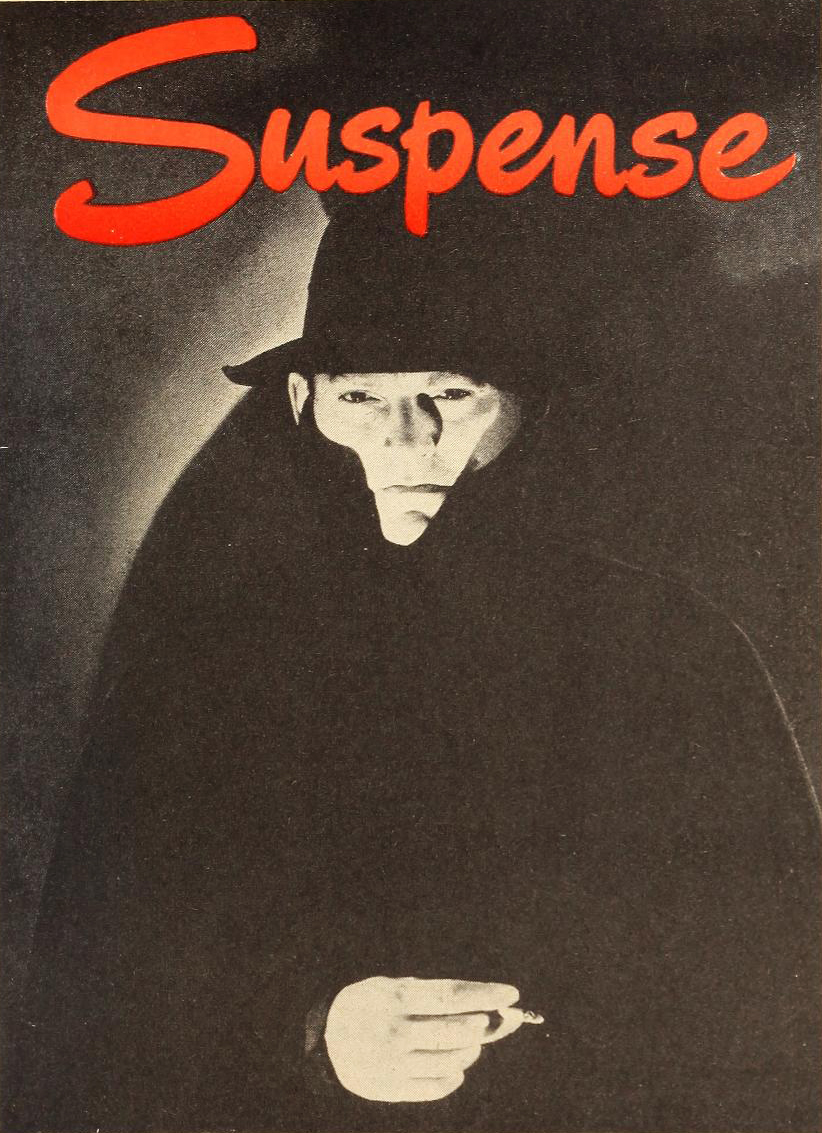
Suspense became one of the most successful programs of the Golden Age of Radio and its twenty-two year run is testimony to that. Subtitled "Radio's Outstanding Theater of Thrills," Suspense drew an impressive array of talent to its microphone over the the years. In addition to Alfred Hitchcock, listeners heard the talents of Cary Grant, Lucille Ball, Rita Hayworth, Peter Lorre, Vincent Price, Charles Laughton, Loretta Young, Lillian Gish, Gene Kelly, Alan Ladd, Ida Lupino, Olivia de Havilland, Orson Welles, James Stewart, and many, many more! Many of these talented people were attracted to Suspense because it allowed them to play against type. Where else could you hear Jack Benny and Eve Arden play scheming killers?

While Suspense had many sponsors over the years, I think most old time radio fans tend to associate Roma Wines with the program. From 1943 to 1948, the Fresno, CA-based wine company hawked its wares to Suspense's audience by assuring listeners that Roma Wine was “America’s largest selling wine” and was “Made in California for enjoyment throughout the world.”

Today, we have three episodes of Suspense's more horror-centric stories. First up is "Fugue in C Minor," written by Lucille Fletcher and starring Vincent Price and Ida Lupino. Ol' Vinnie plays a widower looking to make Ms. Lupino his new wife. Good news: Price owns a very large house. Bad news: said house is built around a enormous pipe organ. Worse news: Price's children tell Lupino that they think their father murdered their mother and the woman's ghost inhabits the organ!

Next is a two-parter -- "Donovan's Brain," based on the Kurt Siodmak novel and starring Orson Welles. Welles portrays Dr. Patrick Cory, who has been experimenting recently on keeping the brains of dead monkeys alive. A nearby plane crash brings the ruthless robber baron, William Donovan, into Cory's life and his lab. Cory succeeds in keeping the industrialist's brain alive, but Donovan doesn't let the fact that he doesn't have a body stop him from taking over Cory's mind.


Last, we have what an early entry into the found-footage genre: "Ghost Hunt." Ralph Edwards plays Smiley Smith, a radio deejay who records his night in a house where four people are known to have committed suicide.

Saturday, October 22, 2022

Blog-o-ween: H.P. Lovecraft

It seems strange to say it, but one of the most influential artists on 21st century horror is an early 20th century pulp fiction Anglophile who styled himself after 19th century writers and who wished he'd lived in 18th century, pre-Revolution America. H.P. Lovecraft and his ideas about "cosmic horror" are ubiquitous across all media: movies, music, comic books, board games, video games, role-playing games, etc.

It also seems strange that so many people should find something of worth in the works of a man who is very problematic from a 21st century point-of-view. Name a race, a gender, a sexual orientation, a national origin, attach the suffix “-phobe” to the end, and you’d have a pretty accurate description of the man.

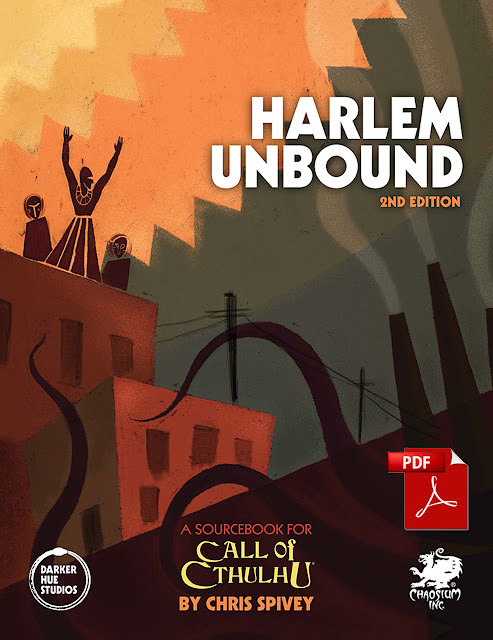
Yet, there’s something about Lovecraft's work, his description of the creatures from “outside” our world, and our petty human understanding of them that inexplicably draws people to them. Black, white, gay, straight, men, women, and every point on the spectrum these terms try to define – everyone, it seems, finds something in Lovecraft that they can use in their own work and in their own way. For instance, HBO’s Lovecraft Country, Victor LaValle’s novel The Ballad of Black Tom, and Chris Spivey’s Harlem Unbound (an excellent sourcebook for the RPG Call of Cthulhu), are all works by black artists about the black experience that use Lovecraft’s world, but not his worldview.

Perhaps one of the ways in which people find a way into Lovecraft’s work is via his overarching sense of “cosmic horror.” The opening paragraph of Lovecraft’s short story, “The Call of Cthulhu,” serves as a good definition of what that terms meant for him:

"The most merciful thing in the world, I think, is the inability of the human mind to correlate all its contents. We live on a placid island of ignorance in the midst of black seas of infinity, and it was not meant that we should voyage far. The sciences, each straining in its own direction, have hitherto harmed us little; but some day the piecing together of dissociated knowledge will open up such terrifying vistas of reality, and of our frightful position therein, that we shall either go mad from the revelation or flee from the deadly light into the peace and safety of a new dark age.”

While today we half expect to find Lovecraft and the Lovecraftian in our horror films, TV, and other media, such was not always the case. During his lifetime, Lovecraft was not much read, respected, or remunerated. Seen as merely a pulp writer, Lovecraft's work was considerd to be beneath any serious examination by literary critics of the day. It wasn't until after his death in 1937 from stomach cancer that the Lovecraft renaissance began. August Derleth and Donald Wandrei started Arkham House, a publishing company, to preserve Lovecraft's works and keep them in print. Other writers who had exchanged letters with Lovecraft (and Lovecraft was nothing if not a prolific letter writer) and become friends with him, carried on and expanded upon his literary worldview. This "Lovecraft Circle," as they were known, included August Derleth, Clark Aston Smith, and Robert Bloch.

So, where does that leave us? Because Lovecraft was not well known during his life, we don't have much to choose from in terms of old time radio. However, what we do have is top quality.

In 1945, the radio program Suspense aired a version of the classic story "The Dunwich Horror" starring the one and only Ronald Colman as Professor Henry Armitage. It is utterly wonderful and horrifying. Its use of on-the-spot “live” radio reporting into the story – even going so far as to allow a moment or two of “dead air” to heighten the suspense and terror – is a nod to Lovecraft’s mixing of perspectives, voices, and media into his stories.

If you are interested in seeing what Wilbur Whateley may have looked like, then I urge you to visit the YouTube channel of SFX artist Chris Walas (Gremlins, Enemy Mine, Scanners). It will forever change the way you perceive papier-mâché.

Next, we have an episode of the 1960s KPFA (Berkeley)/KPFK (Los Angeles) radio show, The Black Mass. We've already touched upon this show earlier for Blog-o-ween. In fact, we highlighted their adaptation of the H.P. Lovecraft story "The Outsider." (You can read about that and listen to it here.)

The Black Mass was also responsible for another excellent Lovecraft adaptation. In 1964, they aired "The Rats in the Walls." In this story, an American named Delapore, the last descendant of the De la Poer family, moves to his ancestral estate of Exham Priory in England following the death of his only son during World War I. While he restores the estate, he begins to hear the scurrying of rats in the walls. As he searches for explanations for the sounds, he soon discovers the truth about his family and himself. Truth that may be...hard to swallow...heh-heh-heh!

I would be remiss in my duties as host (and all-around swell guy) if I failed to mention the work of The H.P. Lovecraft Historical Society. Formed in 1986 in Boulder, Colorado, by theater people who enjoyed playing the the role-playing game Call of Cthulhu, HPLHS moved the game from their kitchen table to the world at large, essentially turning it into a live action role play, or LARP for short. To make the game seem more real, they created props for their LARPs.

Soon, the HPLHS began creating a fanzine and short films based on Lovecraft's work. They created The Call of Cthulhu in 2005, a silent film rendition of the Lovecraft story. They also produce many "old time radio" adaptations via their Dark Adventure Radio Theatre. You can find these episodes here.

Friday, October 21, 2022

Blog-o-ween 2022: Vampires

What would Halloween be without the classic monsters? Werewolves, mummies, Frankenstein's horrid creation...there are so many takes on these horror archetypes that they always seem fresh. Just when you think the monsters of old have been laid to rest once and for all, up pops a new version to terrorize the countryside.

One archetype that seems to return again and again is the vampire. You just can't keep a good bloodsucker down! And vampires come in all shapes and sizes, too -- you got the classic, Eastern European, tuxedo-sportin' Bela Lugosi-style vamp. If that ain't the way you take your nosferatus, you can enjoy your swanky, boat-neck-sweater-wearing Chris Sarandon-type. There's always the metaphoric vampire-as-drug-addict Lili Taylor look. Or maybe you just don't dig the dashing leading man/woman variety. Maybe you're one of the true sickos who sees this visage in your dreams...

Whichever way you take your vamps, if you are down with the undead, then today's Blog-o-ween entry is for you. Earlier this month, we spotlighted the Canadian radio series Nightfall. As an example of that show, we took a look at their adaptation of J. Sheridan La Fanu's female vampire story, "Carmilla." If you didn't get a chance to listen to it, then take the time today. It's a good one.

If we're talking vampires, then we had better start with Bram Stoker's creation, Dracula. today we have not one, but two versions of Stoker's story. The first is from Orson Welles and The Mercury Theatre on the Air. It was first broadcast in the spooky month of...July, 1938...and it stars Welles himself as ol' Drac and Agnes Moorehead in the role of Mina Harker. Look for more Moorehead later this month, but in the meanwhile feast your eyes on this lovely photo of Agnes...


The other version of Dracula is from the CBS Radio Mystery Theater, and it features another of radio's greatest actors in the role of Mina: Mercedes McCambridge. We took a look at Ms. McCambridge's radio career previously, so it's nice to get a chance to hear her wonderful voice again.

Last, but certainly not least is a non-Dracula vampire story from The Hermit's Cave. A syndicated radio program from the late-1930s, uniquely, The Hermit's Cave's syndication was achieved not via recordings, but through the scripts themselves. That way, each station could broadcast the program with their own casts.

Today's episode, "The Vampire's Desire" is about two men seeking shelter from a raging storm. They are initially turned away by an old woman in a run down house. They force their way in and soon   become trapped in a sealed room with a dead body in it! There are some things worse than being wet, it seems. Indeed...you may just catch your death! Heh-heh-heh!

(I'm gettin' pretty good at this horror host banter!)

Thursday, October 20, 2022

Blog-o-ween 2022: Quiet Please

It is not often that you get more than one shot at the brass ring in your life. The carousel moves pretty fast, and your horse may be going down when you need it to go up. Rarer still is the person who is capable of grabbing ahold of said ring on more than one occasion. Wyllis Cooper is just such a man.

Born in 1899 in Pekin, Illinois, Wyllis Cooper joined the U.S. Cavalry soon after graduating from high school. Unfortunately, the First World War was still being fought at the time. In 1917, he was sent to France, and he was gassed during the Meuse-Argonne Offensive. When he returned home in 1919, he became an advertising man, working in radio by the time the 1920s were in full swing.

In 1934, he created his first great radio show, Lights Out. In 1936, he left Lights Out in the more than capable hands of Arch Oboler -- he of "A Day at the Dentist" fame (see the Blog-o-ween entry for 1 October for that short, sharp tale). Cooper, like so many other successful writers, went to Hollywood. There, he wrote scripts for the Mr. Moto series, as well as Son of Frankenstein in 1939.

After moving to New York City in 1940, Cooper returned to his advertising roots, working in the radio department of Compton Advertising, Inc. In 1944, lightning struck a second time in Cooper's professional life when he created Quiet Please.

With actor Ernest Chappell behind the mic for each episode, Cooper's scripts for Quiet Please ranged from science fiction to family dramas to out and out horror. It was a rare episode of Quiet Please that required more than two or three actors. Chappell's deadpan delivery of Cooper's words were usually sufficient. What Cooper wanted for Quiet Please were actors who could act without acting. He wanted his show to sound like it was really happening. Chappell was the perfect man for the job.

By the time the show ran its course and wrapped up in the summer of 1949, Quiet Please had amassed 106 episodes of dark fantasy that radio historians consider to be the pinnacle of the artform. Here, for your listening pleasure, are three...

First up is a story about a house near the astronomical observatory at the top of Mt. Wilson. The men are planning to rob a bank and decide that the little house is the perfect place to hide their ill-gotten gains. They ask someone at the observatory what is inside the house, and they are told that there is "Nothing Behind the Door." Truer words were never spoken.

Next up is "Wear the Dead Man's Coat." This is the story of a homeless man who just wants to find a coat to keep him warm. Desperate, he kills a man and takes his coat. As he tries to avoid being noticed, he recalls an old saying from his childhood: "Wear the dead man's coat, none take note." Once again...truer words, man...truer words...

Let's end the evening with one of Quiet Please's more light-hearted episodes. This one is also perfect for this spooky season. In "Don't tell Me About Halloween," a man marries a witch, but he only needs to see her once a year...on Halloween. He spends the rest of the time dreading seeing his wife, because she will find out what he's been up to the rest of the year. She's a jealous woman, you see, and if her hubby hasn't been faithful...well...at least marriage doesn't last forever, right? Right?!

Wednesday, October 19, 2022

Blog-o-ween 2022: Boris Karloff

The subject of today's Blog-o-ween entry has got to be the most famous horror icon of them all. If a Mt. Rushmore of Horror was every created, then Boris Karloff's face would have to be included. Not only is Karloff's face instantly recognizable, whether in or out of the Frankenstein Monster's make-up, but Karloff's voice, with its soft yet oddly sinister lisp, is known by adults and children alike thanks to his narration of the Television adaptation of Dr. Seuss's The Grinch Who Stole Christmas. Not only is Karloff the face of classic horror, he is also the voice -- why else would Johnny's (Russell Streiner) impersonation of the venerable actor as he taunted his sister Barbara (Judith O'Dea) in the cemetery in Night of the Living Dead work so well?

Boris Karloff was born William Henry Pratt in Dulwich, Surrey, England (now a part of London) in 1887. In 1909, after leaving King's College London with graduating, he went to Canada where he worked in various fields (sometimes literally as a farm worker) until he began appearing in theatrical performances in 1911. It was at this time that he chose the stage name that would forever follow him in his new career. There are many theories about why he chose the name "Boris Karloff" in particular, but there can be no doubt about why he chose to change his name at all. Karloff was afraid of causing embarrassment to his family with his chosen career. While his brothers were all distinguished members of the British Foreign Service, Karloff felt as though he was the black sheep of the family. It wasn't until many years later, when he returned to England in 1933, that he discovered that his family were very proud of him and considered him a boon to the family, not a bane.

To list all of Karloff's theatrical performances and film, TV, and radio roles would take much more time than we have at present. In fact, to list the movies Karloff made in the twelve years before he became an "overnight" success for Frankenstein would be a feat in itself. Needless to say that Karloff put in years and years of work as a jobbing actor (as well as a ditch digger and construction worker) bfore James Whale saw him in the Univeral Studios commissary eating lunch.

For tonight's first old time radio show, we have an episode of Creeps By Night. In "Final Reckoning," Karloff portrays George Miller, a man released from prison after twenty years who is determined to get his revenge.

Next up is "Cat Wife," an episode of Lights Out. In it, Karloff plays a man who accuses his wife of being a heartless cat (as you do), only to see his words become flesh as she begins a strange and terrible transformation.

Last but not least, we have an episode of Inner Sanctum. Karloff plays a sick man stuck in the hospital. After being dropped off by his son, the man finds himself walking down an long hallway towards a door...a door with his name on it! What will Karloff find behind the door at the end of..."The Corridor of Doom?"

Tuesday, October 18, 2022

Blog-o-ween 2022: Video Palace

Ahh, the good ol' days of picking up a few friends on a Friday night, heading on over to the videostore, and spending an hour or two judging movies by their clamshell case covers. Most of the time, what was happening in the artwork rarely happened in the movie, but the pleasure was in the hunt for that rare movie that gave more than the $5.00-for-three-days rental fee was worth. Usually, you just considered yourself lucky if you got a shot or two of topless ladies gallivanting around and a kill scene that was gory and imaginative enough to get you to rewind it a couple of times. Every once in a great while you stumbled upon a Re-Animator, a Phantasm, or a Pieces.

I suppose I should just count myself lucky that my friends and I never stumbled upon a mysterious white VHS tape like Mark Cambria did in the excellent horror podcast series Video Palace. Getting stuck with a crummy movie is one thing. Getting sucked into dark machinations of a cult is quite another.

Produced by all-horror streaming service Shudder, Video Palace lasted for a single season. Over ten episodes and five bonus minisodes, we follow Mark (Chase Williamson) and his girlfriend Tamra (Devin Sidell) as they dig into the story behind the white tape and its connection to a long-out-of-business video store in Vermont called...Video Palace. What Mark and Tamra uncover is, of course, scarier, more disturbing, and more nefarious than what you found behind the beaded curtain in the "Adult" section of your neighborhood video store.

Video Palace, like many other horror podcasts, is concerned with physical media and the archive. Mark is a VHS collector and exudes all the hallmarks of that obsessive subculture. In his set-up for the series, Mark talks about the history of video cassettes, and how there are tons of movies that sat on the shelves of video stores that will never see a modern DVD or Blu-ray release, will never stream on the internet unless people like him do the work of searching for them. Mark buys old VHS tapes in huge lots, digs through them, and hopes that he may find that one tape that everyone is looking for. The one tape that everyone thought was lost for all time. The archive isn't what is on the shelves of your local library or museum or historical society. It's in the basement and attics and living rooms of obsessive collectors like Mark.

Video Palace also shares another characteristic with other podcasts: it's a podcast that knows it's a podcast. Mark may not be an investigative reporter for NPR, but the story he tells is put together in much the same way. He records everything (much to Tamra's chagrin) then edits it all together. Mark says that Tamra insisted that their podcast have "real music," so he tells us their friend Kat wrote everything we hear. Everything about Video Palace is knowingly constructed, and that structure points to it being a real story, like the aforementioned NPR stories. This layer of verisimilitude gives Video Palace an extra layer of creepiness, much like the shakey, hand-held camera interviews with the townsfolk in The Blair With Project help us believe that the story we are seeing is possibly happening for real. Mark interviews many people about the mysterious video store and the white tape, and those interviews fairly drip with dread, but they also give the story a patina of plausibility.

You can find Video Palace on Shudder's website, as well as on YouTube and the usual podcast streaming sites. Here's the first episode...

Monday, October 17, 2022

Blog-o-ween 2022: Mercedes McCambridge

Orson Welles, who knew a little something about radio acting (besides scaring the bejabbers out of listeners with The Mercury Theatre on the Air's verion of H.G. Wells's The War of the Worlds, Welles was also the voice of Lamont Cranston, aka The Shadow), called her "the world's greatest living radio actress." Her credits include episodes of Lights Out, Inner Sanctum, This Is Peggy Drake, Studio One, and the CBS Radio Mystery Theater. She worked in film, as well, appaering in Giant (1956), Suddenly, Last Summer (1959), Johnny Guitar (1954), and All the King's Men (1949), for which she was awarded the Oscar for Best Supporting Actress. What she is most well-known for, however, is a voice performance in a film. Her vocal work as Pazuzu, the demon inhabiting young Regan's (Linda Blair) body in The Exorcist (1973), probably scared people as much as the spinning heads and spraying pea soup.

Today, Blog-o-ween shines the spotlight on Mercedes McCambridge.

Mercedes McCambridge was born in Joliet, Illinois in 1916. After graduating from Mundelein College in Chicago, she made the move to New York City where she acted on Broadway. While treading the boards, she also began acting on the radio in the late-1930s. Her radio acting career stretched well-past the sell-by date of the Golden Age of Radio. In the 1970s, she was still appearing on radio drama, acting in Himan Brown's latest auditory offering, the CBS Radio Mystery Theater.

But, really, if anyone today knows Mercedes McCambridge, it is for her work in William Friedkin's adapatation of William Peter Blatty's novel The Exorcist. Utilizing all of the tricks and tools she'd picked up in her 40-year acting career -- as well as some raw eggs, cigarettes, and booze -- McCambridge created the definitive demon vocal performance. Friedkin himself claimed that he bound her to a chair during her recordings to help her get in the mood. When she died in 2004, NPR's Fresh Air offered this remembrance of the actor and her most famous role.

First up in tonight's Mercedes McCambridge appreciation post, we have an episode of Inner Sanctum. “Blood of Cain” is a story of dark family secrets and a chilling legacy handed down through generations.

Next, we have an episode of Arch Oboler's Lights Out called "It Happened." This story concerns a wealthy girl taking a tour of Paris. She becomes fed up with her boring old tour guide and decides to find her own way. Unfortunately for her, she ends up wandering into the sewers and running into...well...that would be telling.

Last, is an episode of the CBS Radio Mystery Theater about that most 1970s of subjects: The Bermuda Triangle. McCambridge plays the sole survivor of a plane that disappeared into "The Triangle."